







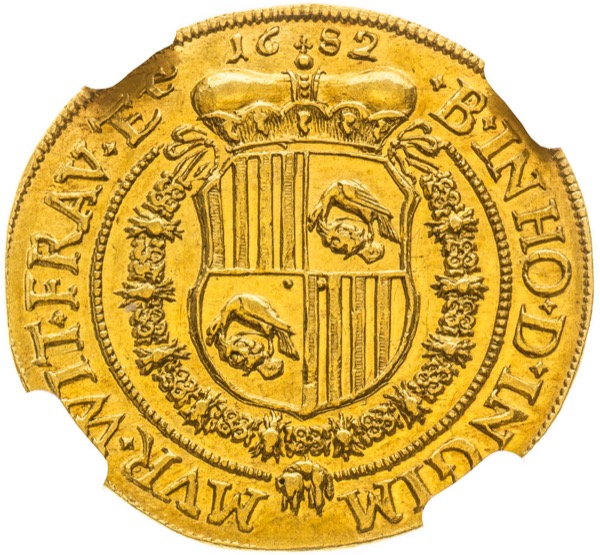
One of the most impressive examples of the coinage art of German princes at the turn of the 17th and 18th centuries are the issues of the Schwarzenberg family. A quartet of ducats from the years 1682, 1693, 1729 and 1768 captures more than eighty years of development in princely portrait coinage. They represent the path from the High Baroque with its pompous monumentality to the delicate Rococo elegance and the Enlightenment refinement of form.
The House of Schwarzenberg
The House of Schwarzenberg, originally from Franconia and later firmly rooted in Bohemia, belonged among the leading noble families of the Holy Roman Empire. Its members held important military and diplomatic offices and, as holders of minting rights, struck gold ducats. These coins primarily had a representative character – they served as gifts on exceptional occasions, as rewards for merit, and as a means of strengthening the family’s prestige.
Princely Portraits on the Ducats
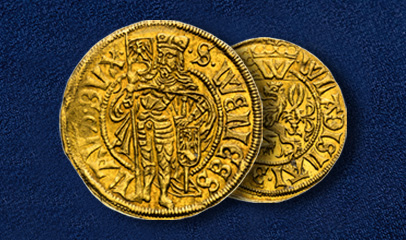
1682 – The oldest ducat depicts Prince Johann Adolf I of Schwarzenberg (1615–1683). His portrait, with long curls and majestic armor, corresponds to the ideals of the High Baroque, emphasizing military glory and the ruler’s representation.
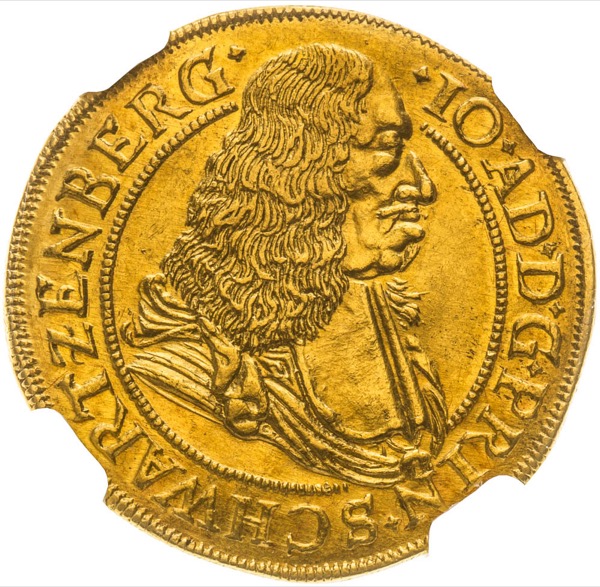
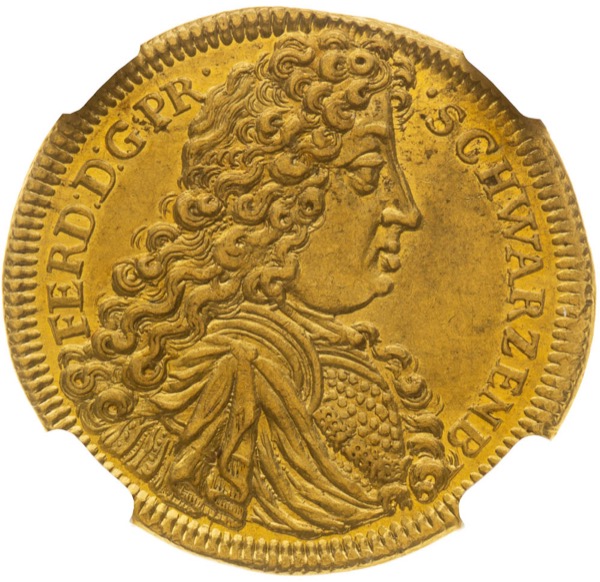
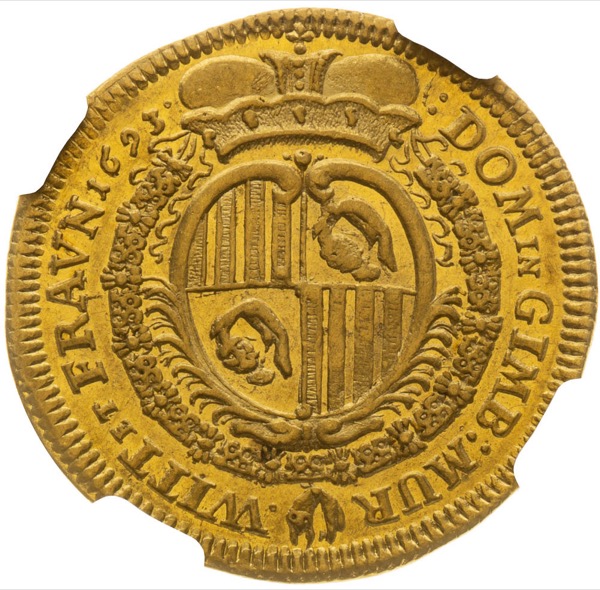
1693 – Ten years later appears the likeness of his successor Ferdinand Wilhelm of Schwarzenberg (1652–1703). The forms are softer and the composition more concentrated, but the piece still bears the marks of Baroque monumentality. The ducat expresses a generational change and the smooth continuity of the family line.
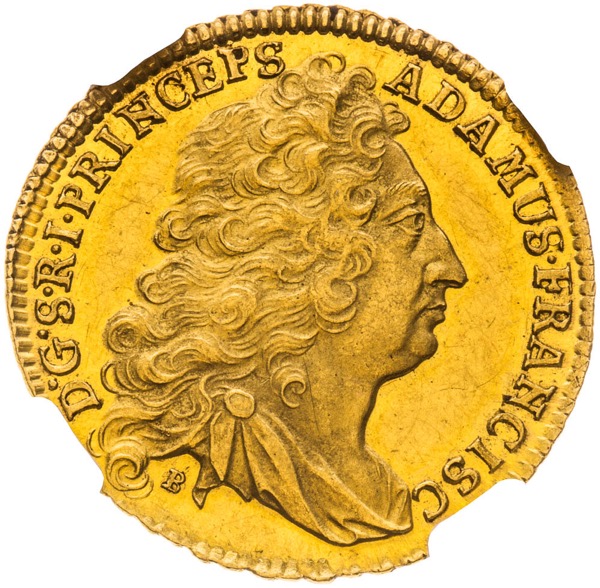
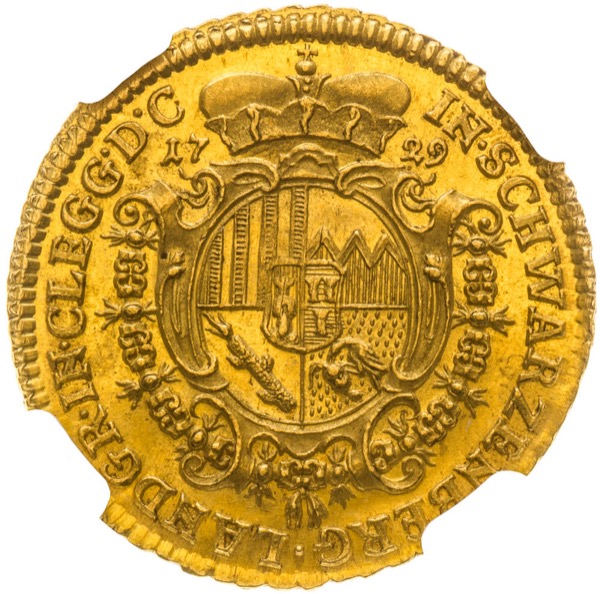
1729 – The ducat from the first third of the 18th century bears the portrait of Adam Franz of Schwarzenberg (1680–1732). In his profile one can already see the lightness and elegance of the emerging Rococo. The hair appears freer, the features more relaxed, and the overall composition more harmonious.
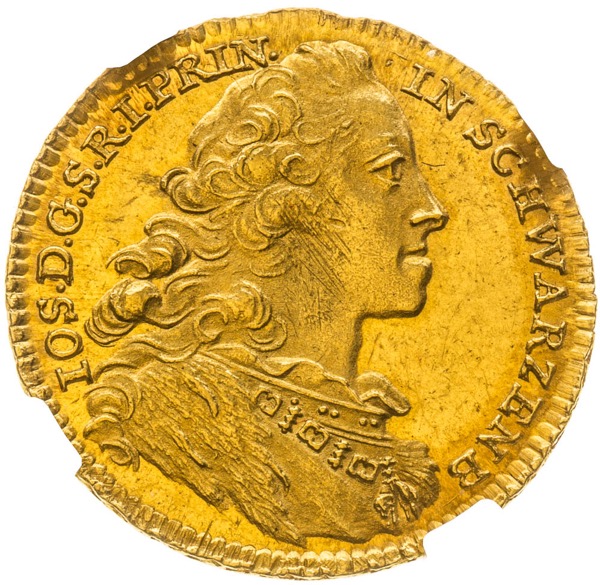
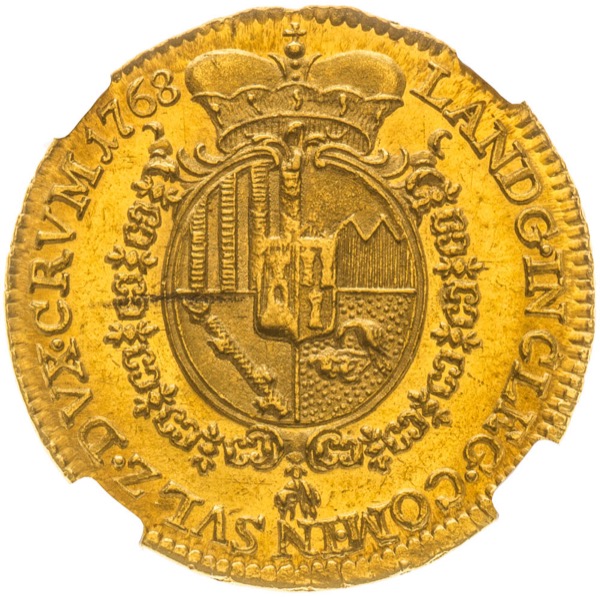
1768 – The youngest ducat presents Joseph I of Schwarzenberg (1722–1782). The portrait is slimmer, more civilian, and already anticipates the aesthetics of the Enlightenment. It reflects the transition to a new concept of princely representation – dignified yet less pompous, more oriented toward a rational image of princely authority.
Connection and Legacy
All four ducats are united by the depiction of dynastic portraiture, which changed along with artistic styles and the personalities of the princes. They represent a visual chronicle of the Schwarzenberg family, which played an important role not only in German but also in Czech and Austrian history. The ducat was always a symbol of dignity and prestige – the gold issue thus preserves not only the value of the metal, but also the story of a powerful princely dynasty.
Provenance
The story of the Schwarzenberg ducats naturally concludes with a note on their origin: all four offered pieces come from the prestigious collection of Annemarie & Gerd Köhlmoos. This German collector couple, long associated with the innovative company JUWEL Aquarium (Rotenburg/Wümme), built their reputation on what numismatics values most – the systematic selection of first-class specimens, verified provenance, and an emphasis on quality of preservation.
Gold Coins in the Offer of Auction #37
These four ducats of the House of Schwarzenberg are offered together as a single lot – lot 224 – in our upcoming floor Auction #37.
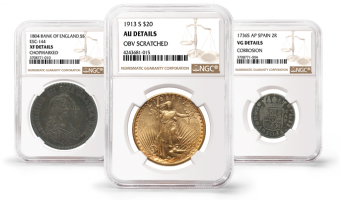
- Ducat 1682 – Johann Adolf I of Schwarzenberg | NGC MS 63+
- Ducat 1693 – Ferdinand Wilhelm of Schwarzenberg | NGC MS 61
- Ducat 1729 – Adam Franz of Schwarzenberg | NGC MS 63
- Ducat 1768 – Joseph I of Schwarzenberg | NGC MS 63+
👉 Starting price: 60,000 €


