







A Remarkable Collection in Auction #38
The presented set of thirteen coins (lots. 62 – 74) is numismatically exceptional—not only for its rarity but, above all, for its unprecedented state of preservation, a quality seldom appearing on the market in such a comprehensive form.
These lots are offered as part of Auction #38
A Revolution in Minting
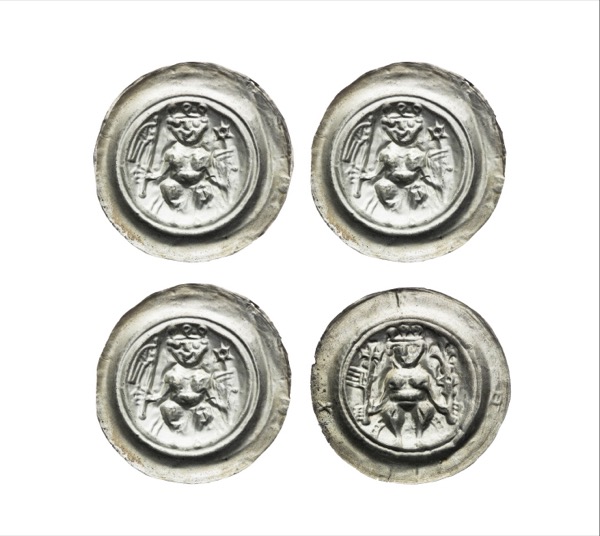
Bracteates—paper-thin coins struck on one side only—represented the pinnacle of minting artistry of their time. Unlike the earlier denars, the large surface of the flan provided space for a true iconographic manifestation of power.
The monarch’s reform of the monetary system was not driven merely by aesthetic considerations or the desire to propagate state power more effectively; one might argue that these were rather secondary positive effects. The change was primarily a rational response to the gradual debasement of the denars.
As denars became less attractive as a medium of trade, more profitable yet illegal exchange practices began to emerge among merchants and subjects, to the particular detriment of the sovereign. Consequently, the minting of bracteates commenced.
Their technical parameters prevented the monarch from debasing the currency, as the addition of copper to the alloy would make the flan harder and more brittle, leading to cracking during the striking of the high reliefs typical of bracteates.
Iconography and Artistic Mastery
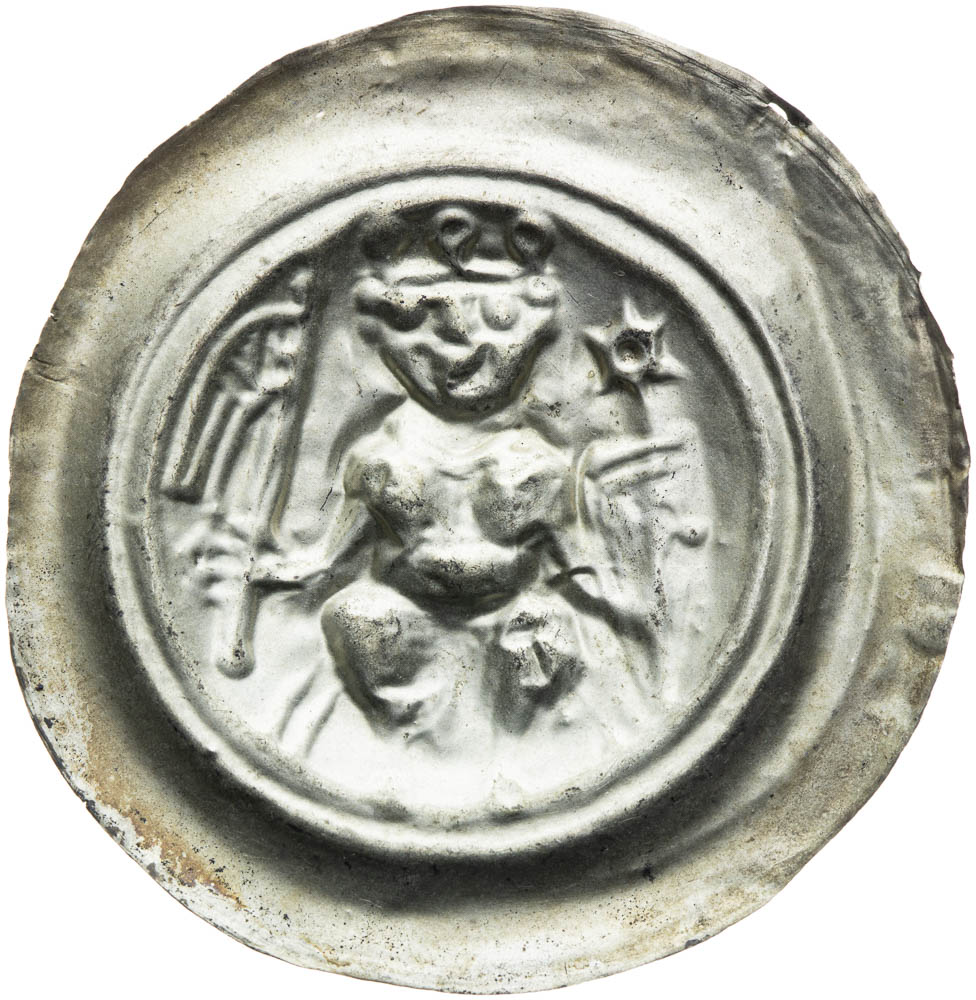
A visually compelling symbol of this period is, for instance, the unique bracteate (auctioned as Lot no. 63), which holds a place of honor in our collection.
The depiction of the enthroned king with prominent facial features and a magnificent crown transports us to an age when Prague was becoming a diplomatic center of Europe. The detailed craftsmanship of the throne and the precision of the individual elements of the image on this piece attest to the masterful skill of the die-cutter and the extraordinary care devoted to the minting process.
Exceptional Preservation and Quality
Although finds from this period, such as the recently published Bořanovice hoard, indicate that Saxon strikes often dominated general circulation, this twelve-piece set represents the finest of domestic Prague production.
While common excavated specimens are often fragmentary, deformed, or affected by soil corrosion, this set excels in superb quality.
The mint luster in the fields and the sharp details of the relief suggest that these coins were not in circulation for long and exhibit only negligible wear.
Selected Highlights from the Set
Among the most remarkable pieces are:
Lot 62 – Unique
Bracteate. Fine example. Remains of mint luster in the fields. Cracked. Minor corrosion. Patina. Slightly wavy.
good EF | good EF | €1,500
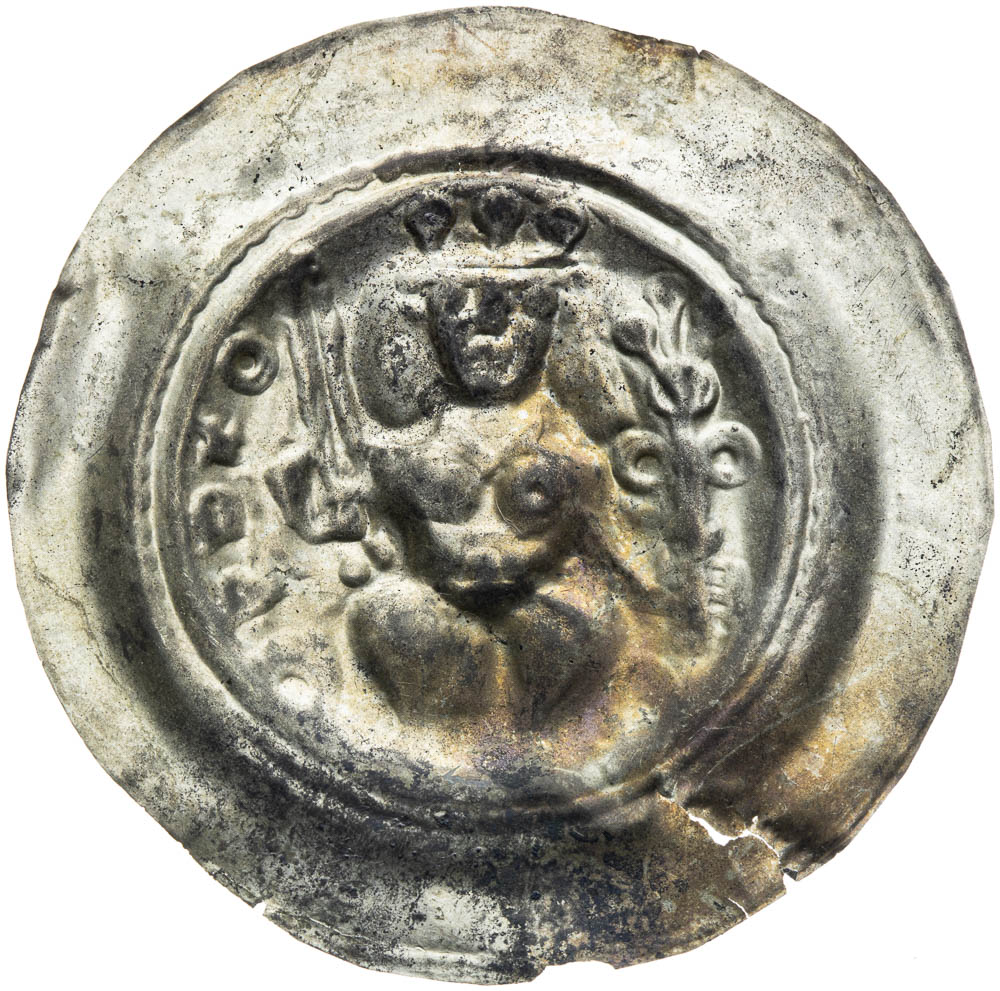
Lot 63 – Unique
Bracteate. Cabinet piece with beautiful patina and mirror-like luster. Minor corrosion. Slightly cracked.
good EF | good EF | €1,500
Lot 66 – Unique
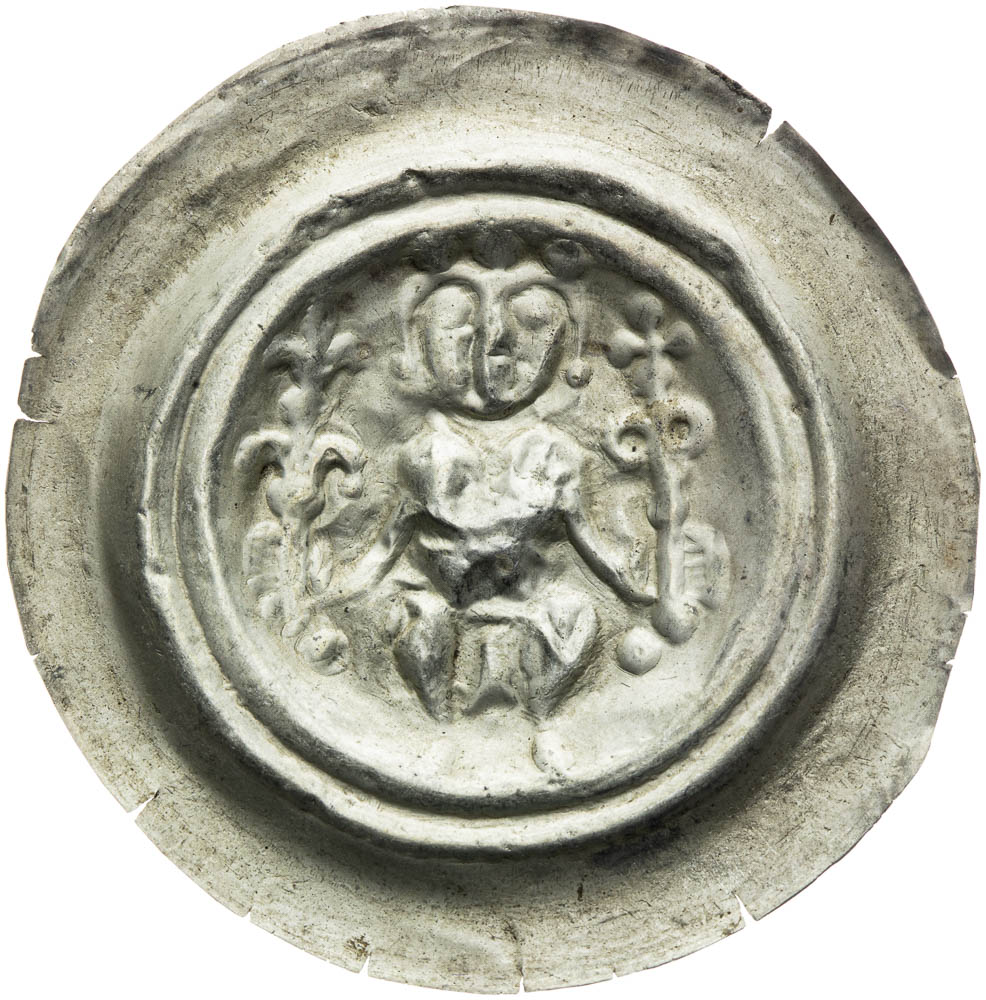
Bracteate. Somewhat weakly struck.
about EF | about EF | €1,200
Lot 67 – Unique
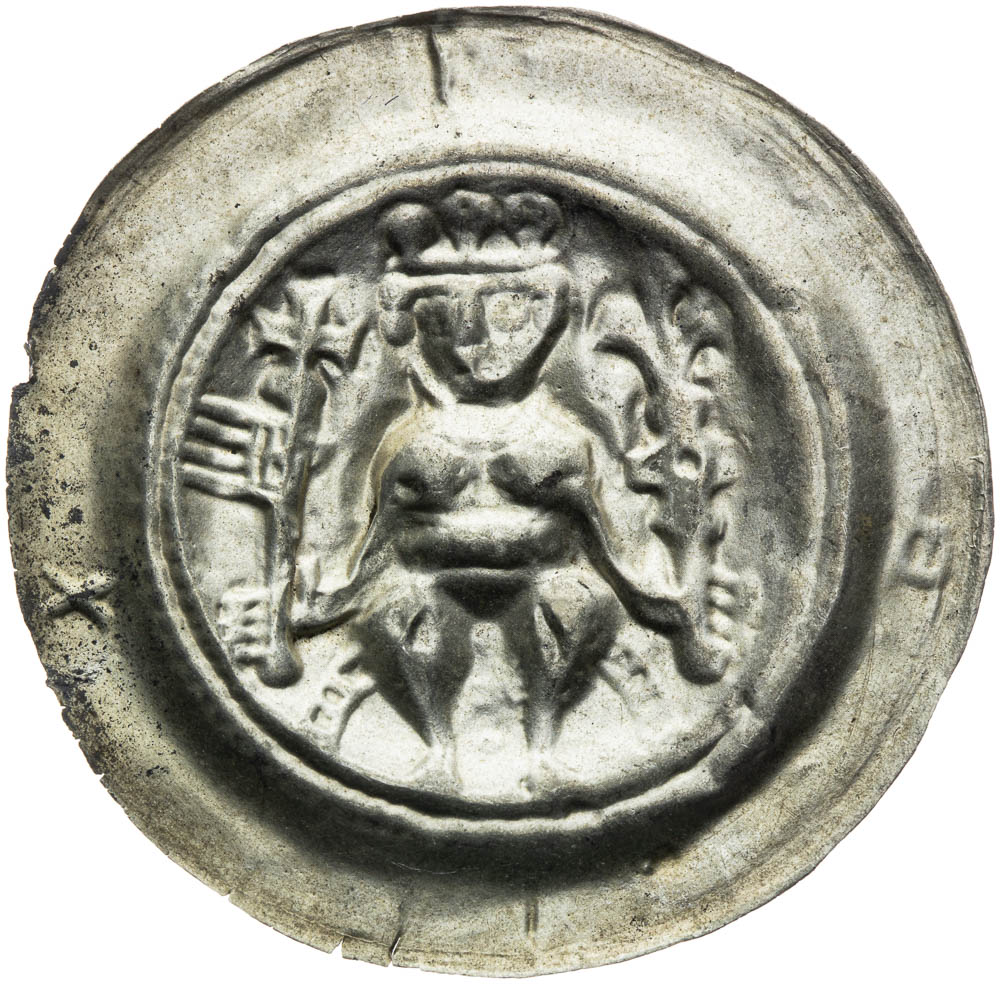
Bracteate. Extraordinary specimen with mint luster in the fields. Light traces of corrosion. Inscription REX on the rim.
good EF | good EF | €1,500
A Challenge for Collectors
Assembling a set of thirteen bracteates in such quality is a formidable task.
The offered collection is a challenge for those who seek more than just a catalogue number in numismatics—it is a challenge for those who wish to own a piece of history in its most perfect form.


